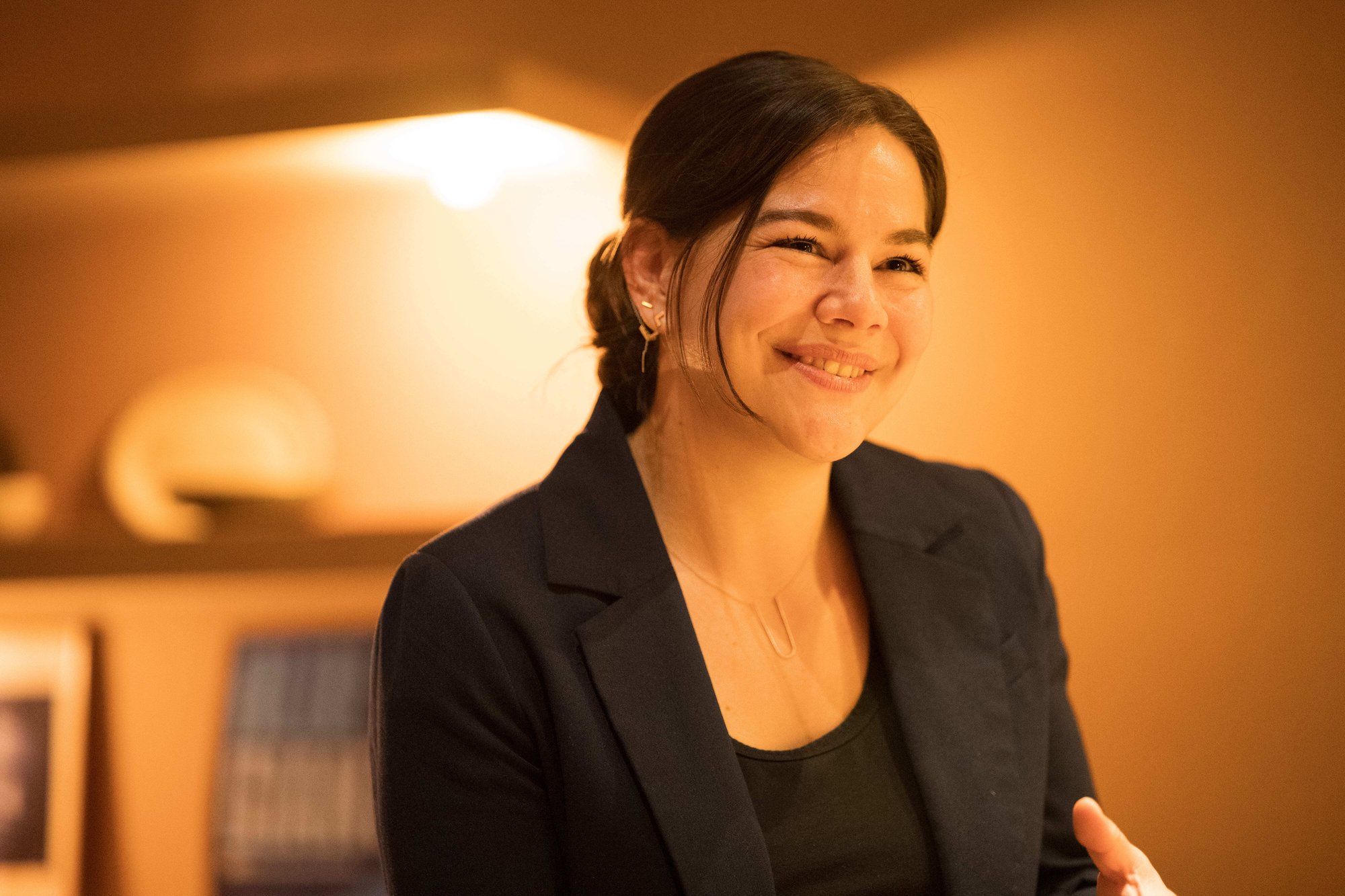
- Julia Momosé
-
Owner-bartender at Bar Kumiko
Born in Nara and raised in Kyoto. Lived in Japan through high school, then moved to the U.S. to attend Cornell University. Started her career as a bartender at Rulloff’s in Ithaca, New York. Moved to Baltimore, Maryland in 2010, where she got experience at RYE of Baltimore. Shined as a bar menu creator after a year and a half. In 2013, began a two-year stint at The Aviary in Chicago as a bar chef and top bartender. Later took a position at GreenRiver. While serving as head bartender there, GreenRiver earned its first Michelin Star. Managed the cocktail program at restaurant Oriole. Gained renown for her cocktail creations for Arriviamo™ Bar at Starbucks Reserve® Roastery. Opened kumiko in 2018 with her cofounder. In March 2020, during the pandemic, launched the Cocktails for Hope⋆² campaign to assist distressed bars in the Chicago area. The book she coauthored in 2021, “The Way of the Cocktail: Japanese Traditions, Techniques, and Recipes,” won a James Beard Foundation Award in 2022.
⋆² Cocktails for Hope: Around the end of March 2020, in the middle of the pandemic, Momosé led this campaign to assist bars. She ran a petition drive seeking to allow the sale of take-out cocktails that moved the City of Chicago to act and catch up with faster-moving cities like New York. The city allowed the sale of bottled cocktails, a decision that saved many Chicago bars.
with Bartender
Exploring the journeys and the thoughts that shape globally active bartenders behind the bar.
2026.06.02
Julia Momosé
A Bartender’s Beautiful Movements Resemble a Ballet Dancer
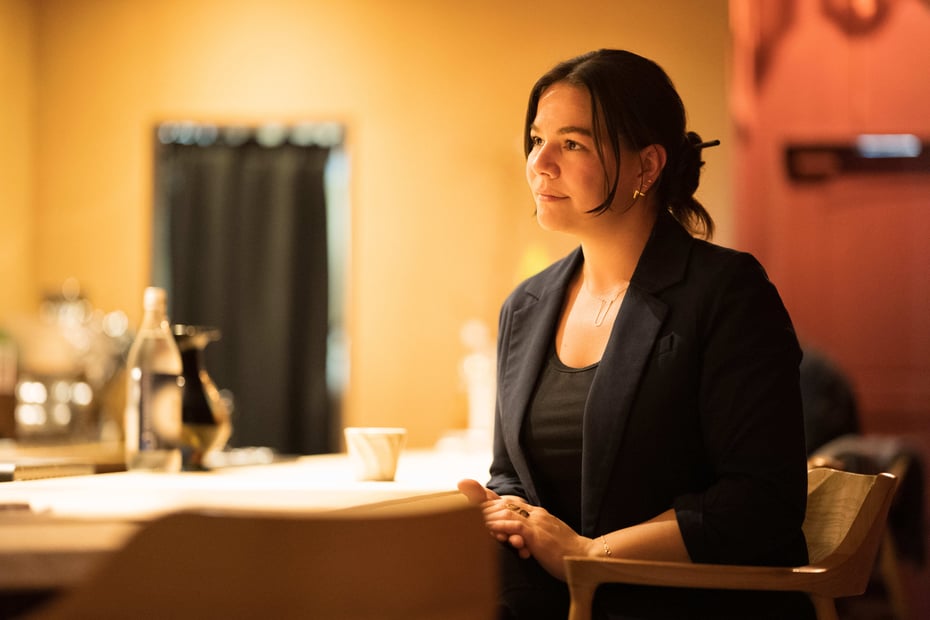
Born in Japan, Julia Momosé grew up there until finishing high school, after which she moved to the U.S. for university. The beauty of her bartending is second to none in the world. With her unique style of serving personalized cocktails and other drinks, Momosé tailors each one to her customers’ tastes and food, while her warm hospitality and smile never fail to put them at ease. She also possesses a deep knowledge of shochu and sake, enabling her to answer any questions customers may have about alcohol. It is no wonder that kumiko, her bar in Chicago, has been selected as one of “The World’s 50 Best Bars,” and was also featured in Time magazine’s “World’s Greatest Places” and in Esquire magazine’s “The Best Bars in America.” This two-part feature will present Momosé’s motivation for becoming a bartender and her vision for her bar, kumiko.
Text: Akira Suzuki / Photography: Koichi Mitsui / Composition: Contentsbrain /
English translation: LIBER
Interview Location: Bar Tannel (1-12-2 Kitahama, Beppu-city, Oita, Japan)
A Memorable Bartender Who Moved Like a Ballet Dancer
――What was your motivation to become a bartender?
I was in a bar in Kyoto’s Gion district with an acquaintance when I was mesmerized by the delicate and beautiful movements of a bartender. Each one had a flow to it, like a ballet dance, as the delicious drinks were mixed with such elegant motions. I remember that time clearly. I left that experience, thinking that one day, I would like to create an elegant moment in some way for another person too.
――Sounds like it made quite the impression. So that event led to your bartending ambitions?
Not at first. I was still a student, and I’d decided to go to college in the States. After getting my degree, I was planning on coming back to Japan to find work. That led to my decision to study at Cornell so I could get a good job upon returning home to Japan.
――That’s a reputable Ivy League school. Did you have to study pretty hard to get in?
Yes, I studied a lot. Essays were a focus of the admissions process. My family name is Momosé, which is Japanese, and I was born and raised in Japan. My mom is Japanese, but Dad is American and Japanese, which makes me a three-quarter Japanese. Although my face doesn’t look very Japanese, I think my mind and my heart are. I thought about what it feels to live in Japan with this appearance, and I wrote about that in my essay. I wrote about things like belonging and about longing; about how the outside and the inside are not always the same. In the end, I managed to get admitted.
I majored in Design and Environmental Analysis (DEA). That would be similar to an interior design major in Japan. Cornell’s campus is in Ithaca, a town in Upstate New York. It’s a beautiful place surrounded by nature. Tuition at private universities in the U.S. is very expensive, so I knew I’d need a part-time job. That’s when I thought of that bar in Kyoto and I decided that I wanted to work as a bartender.
Taught Myself to Mix Drinks by Watching YouTube Videos
The bar I got my part-time job at had a general policy of not hiring women, or as they said it, “college girls,” as bartenders. The manager was born and raised in Ithaca, and I think she was very protective of her establishment. Most of the staff were locals, and I think that’s why she didn’t want to hire a newbie college girl to work behind the bar.
I didn’t question her policy. I asked for the chance to prove myself. I started as a host, a server, cocktail server, and as a barback. I studied cocktails, got to know the regulars, and then six months after I started, the manager let me take a shift as a bartender for a Saturday brunch. I was thrilled! After that, I was able to pick up more shifts and learn.
――She changed her policy? That sounds like a big deal.
I think that it was important for me to prove myself. I’m sure they had some poor experience in the past. The bar’s still around. It’s called Rulloff’s. Working there, I learned about interacting with people and how to move fast. I also worked at Cornell Catering. They brought me to investor-hosted parties and alumni gatherings. These events happened all over campus and in some private residences.
Standard cocktails were popular, so I practiced them over and over again by watching videos on YouTube and other platforms. I also prepared a cocktail set at home so I could practice there, too. Videos of bartending competitions in Japan were very helpful. I also watched a lot of classical ballet videos. That was because I thought that bartenders, like the one I saw in Kyoto, move like ballet dancers. Strength and elegance.
――Did you keep bartending part-time until you graduated from the university?
I never stopped bartending, but I also never graduated. I dropped out after three years. After matriculating, I had a series of friends pass away. The causes were illness and suicide. I was utterly heartbroken. It hurt so much that I had trouble interacting with customers while working at the bar. I felt like I couldn’t stay there anymore. Everything was a reminder.
I decided to move back in with my parents to get my head straight, so I submitted a leave of absence and came back to Japan. At that point, I thought I’d eventually go back to school and graduate, but I ended up not. Instead, I went fully into the bar business.
――Were your parents back in Japan surprised to hear about you dropping out?
They were incredibly worried. My mom and dad are both very kind people. It seems like they’re always concerned about me. That made me feel so bad for them.
The Decisive Moment: Watching the Meticulous Work of a Kobe Bartender
――After dropping out, why did you decide to get into the bar business instead of going back to school?
I liked studying design in college, but I also wanted to open my own bar one day. I think a big influence was the impression I got from a bar in Kobe that I happened to visit with a friend after I got back to Japan. The owner-bartender worked the bar all by himself. I also heard he had designed the interior on his own.
He was painstakingly shaving a block of ice into a sphere for a single cocktail. Even for a simple highball or a rum and coke, he would carefully craft each one. I could tell he really wanted to serve the best possible drinks for his customers.
While I was watching, I decided that when I open my own bar, I want to design the interior myself and attentively serve the customers on my own. I felt the importance of focusing on the accumulation of little things. I formed a clear idea about what kind of bar I wanted to open. That was the moment I made up my mind: “I’m gonna make it happen before I turn 30.”
After that, I went back to the States, went through the procedures to withdraw from the university, then headed for Baltimore. The first place I worked at was a café/bar/restaurant for families. They mainly served simple cocktails, so nothing fancy.
Around that time, a friend took me to a cocktail bar called RYE of Baltimore, and I really liked it because it was intentional. One day, RYE’s owner visited the bar I was working at. I made various cocktails for him, and later he asked if I wanted to work at RYE, so I ended up getting a job there. RYE was a bar that mainly served old-fashioned standard cocktails like Manhattan or Sazerac, but it also served new ones like fruit cocktails. It was also a place that chefs and bartenders from nearby restaurants would visit from time to time. I helped them open a second bar, and it became more creative with my own recipes.
One day, a chef brought in all sorts of ingredients from the kitchen and suggested we try making cocktails with them, so I experimented with yaki-imo (baked sweet potatoes). When I salted and baked them, the sugar inside came out and they tasted like caramel. I put them in bourbon and added some flavor. When I tried making an Old Fashioned with them, it became a popular cocktail at our bar.
I included this cocktail recipe in my book, “The Way of the Cocktail.”⋆1 I call it the Yaki-imo Old Fashioned.
⋆1 “The Way of the Cocktail: Japanese Traditions, Techniques, and Recipes” (Coauthors: Julia Momosé, Emma Janzen. Publisher: Clarkson Potter. Publication date: November 9, 2021
One day, a friend gave me some advice: “Julia, you should go somewhere bigger.” They meant a big city like New York, Los Angeles, or San Francisco, instead of just staying in Baltimore. So I made up my mind and moved to Chicago in 2013. I got a job there at The Aviary.
Momosé’s Own Bar in Chicago, Opened in 2018
――What was your impression of Chicago?
It’s a big city, but it feels like there are small towns inside it. Chicagoans are very friendly. They are also hard workers who endure long winters, and celebrate the summers. It sounds simple but these factors made me feel like I could live there for a while.
It was around this time that I made a long-term plan for my life. After Chicago, I was going to go to San Francisco, and then to Singapore. That was because there are lots of interesting bars opening in Singapore. I also thought it would be easy to visit Japan from there, because of the distance. But after 12 years, I’m still in Chicago. (Laughs.)
――What kinds of places did you work at after moving to Chicago?
I was a “bar chef” at The Aviary for two years from 2013 to 2015, and then I worked at a restaurant called GreenRiver. It was a collaboration between New York’s Dead Rabbit and Danny Meyer. GreenRiver had an interesting bar with an extensive restaurant cocktail menu. As the opening bartender, I was writing up the cocktail menu recipes.
In 2017, I started working on the side as a bar consultant. I was creating spiritfree pairings and writing cocktail menus for Oriole. Soon after that, the chef Noah Sandoval asked me about opening a bar with him. We decided to open kumiko in the West Loop, an area of Chicago with a lot of restaurants. Until kumiko opened, I was working at Oriole while also writing drink menu recipes for five Starbucks Reserve® Roastery locations (in Seattle, Milan, Tokyo, Chicago, and New York).
テスト
Employee Well-Being Is the Top Priority. That Leads to Better Customer Service
The bar kumiko opened in Chicago in 2018. It attracted attention for its unique style of serving personalized cocktails that also go with each customer’s meal. But in 2020, the pandemic forced restaurants to temporarily close. During that time, the bar industry faced a serious business crisis. Julia and two of her associates launched Cocktails for Hope, a campaign petitioning Chicago’s municipal authorities for permission to sell take-out cocktails. That permission was granted as a result of their tenacious negotiations, and the policy went a long way in helping bars stay in business. In Part 2 of this interview, we asked Julia Momosé about the concept behind her bar’s name and her memories of her social action.
Text: Akira Suzuki / Photography: Koichi Mitsui / Composition: Contentsbrain / English translation: LIBER
Interview Location: Bar Tannel (1-12-2 Kitahama, Beppu-city, Oita, Japan)
I Value the Time and Process Leading to the Finished Product
――You had a goal of opening your own place by age 30, right?
Yes. Kumiko opened in 2018 on New Year’s Eve. I turned 30 the next month, so I barely made it. (Laughs.)
――Why did you decide to name your bar kumiko?
I had a lot of trouble trying to choose the name, so I wrote down the policies for the bar: passion and meticulous care, cooking with natural ingredients and focusing on long proven techniques instead of modern ones, and placing importance not on the finished cocktail or dish, but on the time and process to get there.
The name kumiko comes from kumiko-zaiku, a kind of traditional Japanese woodworking⋆1. The kumiko-zaiku process starts with the wood. After you plant a seed, it takes decades for a tree to grow. When you fell it, you can’t use the timber right away because you have to let it dry for a few years. That patience is important. The artisans who carve the wood into intricate patterns have to work and practice for years before they can finally produce their beautiful creations. That’s amazing to me, and I chose the name kumiko because the kumiko-zaiku approach ties in with the bar’s policy.
⋆1 Kumiko-zaiku: Traditional Japanese woodworking in which elaborate patterns are created by manually assembling thin boards and pieces of wood one at a time without the use of nails or other fasteners. Used for interior decoration.
Likewise, Sanwa Shurui’s wonderful, honkaku barley shochu (single distillation barley shochu) is made from barley that farmers grow and harvest. The brewer uses that barley and quality water in a number of processes to create the final product. Before the shochu reaches us, considerable time and effort goes into its production. I think it’s important to think about that when making cocktails. I research where every ingredient–ice, fruit, juice, and spirits–comes from and I respect its origin as I shape the cocktail experience. That’s how I work, and how I am inspired.
There are two panels behind the bar. If you look at them, I think you’ll understand what kumiko-zaiku is. The patterns are asanoha (hemp leaves) and goma (sesame seeds). Each has its own meaning. Hemp leaves are said to ward off evil, while sesame seeds are supposed to bring good health and happiness. I keep this in mind when serving cocktails at kumiko. The kumiko-zaiku panels at the bar express my hope that the customers will live long and happy lives after enjoying delicious food and drink in a safe place.
The Employees Are What Makes Bar kumiko Special
――As the owner of a bar, what are the kinds of things that concern you on a day-to-day basis?
The well-being and safety of my team is paramount. A woman working the bar may receive inappropriate comments or get irritated by her male coworkers-it has happened to me. At kumiko, I think the employees are my most important asset and I want to protect them. They are what makes kumiko special.
A safe workplace environment allows employees to provide better customer service. If an employee is worried about their safety, they can’t think about the guests. I want us to feel comfortable and focused so we can offer wonderful service. We take care of each other first. Then we can take better care of our guests.
I’m not too tough a boss, but I’m not too lenient, either. (Laughs.) I do ask a lot. I have high expectations. But most of all to myself. I think mutual respect is important, so I try to make kumiko an intentional place where we can also be serious and honest, but also have a good time.
――What inspired the concept of entertaining customers by pairing Japanese cuisine with cocktails?
Personally, I’ve always liked wine bars and dining bars; places where you can eat and drink, pairing your food with beverages. There are lots of places like that for wine and beer, but there weren’t many where you could pair cuisine with cocktails. That’s why I wanted to make cocktails with a relatively low alcohol content, with recipes based on honkaku shochu and sake and other Japanese ingredients, paired with food.
When we first opened, we put out a tasting menu at the bar counter. We prepared about six different drinks to pair with each dish, including wine, beer, and a few cocktails, along with spiritfree recipes. We had no more than eight or so guests at a time, so we would chat with each one, ask what kinds of drinks they like, whether they preferred strong or weak drinks, and so on. We’d then create personalized pairing menus. Everyone would have the same food, but paired with different drinks. It was quite a challenge, but also lots of fun. This experience earned us a Michelin Star.
Facing the Pandemic
It was right then that the Covid pandemic began. That was a really tough time. On March 13, 2020, the U.S. declared a national emergency. On March 17, all bars and restaurants were ordered to close. Those of us in the restaurant industry didn’t know what to do. We were at a loss.
Since people couldn’t drink cocktails in bars, owners like me wanted to sell take-out cocktails. But that was against the law in Chicago. One official said the mayor would make a decision on the issue, but Illinois state commissioners of commerce, community, and economic development said that they would determine the law.. We were getting different messages from different places.
――If nothing was done, the city’s bars would have gone under.
I felt like I needed to do something, so I started the Cocktails for Hope campaign seeking permission to serve take-out drinks. One of kumiko’s regular customers and a lawyer familiar with the restaurant industry joined me in this effort. We collected signatures to submit a petition and delivered a letter to the Governor of Illinois. Next, we produced a video calling attention to the desperate situation for bars. After we released it, an Illinois official contacted us to discuss the matter.
Around that time, the media finally took notice of our plight and wrote articles about it. We started getting phone calls from lots of different people who helped with our petition drive. A senator drafted a bill and submitted it to the legislature. In June, three months after the state of emergency was declared, we got a law passed that allowed Chicago bars to sell bottled cocktails with a label and a seal.
――It must have required considerable courage to start that campaign. The three of you worked really hard.
I was afraid when we first started the campaign. But while workers laid off from American companies were receiving unemployment benefits, bartenders mostly work for tips and our wages are low in the first place, so without work, we couldn’t get enough money. I wanted to help workers not just at my bar, but at all of Chicago’s bars. When I thought about that, it gave me courage. I could put in the effort because I was doing it for everyone, not just me.
Cocktails Made with Shochu
――You mix cocktails with shochu. What do you think about shochu’s potential in the U.S. market?
Shochu still doesn’t have great name recognition outside of Japan. In the U.S., you see it more than you did five years ago, but I think it’s still got a long way to go. If you use it in a cocktail, it is an opportunity. You’ll probably get a casual question like, “Oh, this is good. What’s in it?” Then, you can tell them it’s shochu.
Bar kumiko’s first floor is a Japanese-style dining bar, while the bar in the basement serves Japanese whisky and shochu at a counter. Guests are guided towards these special Japanese spirits. That makes me really happy. I think shochu is finally getting recognition alongside our a la carte food menu-at least at those ten bar seats.
――How do your customers react the first time they drink shochu?
They’re often quite surprised. Many people don’t know about shochu, so they think it’s Japanese vodka or whisky. But shochu is a spirit that lets you taste the flavor of its ingredients, whether it’s barley or sweet potato. This delights my guests. They say that shochu is delicious, unique, and easy to drink.
――In the U.S., it must be hard to explain what koji is or the koji mold used to make it.
It’s called “mold” in English, but if you say that, at first it scares people. In America, it’s not a word you want to use. But if you say, “It’s used for miso and soy sauce,” that makes a different impression and they’ll feel okay about drinking it. If you talk about how there are different types of mold used to make koji, such as yellow, black, or white koji mold, and how different types of mold result in shochu with totally different tastes and flavors, that will get people interested.
There would be no shochu without koji, so it’s a very important ingredient. Shochu is generally 25% alcohol, but it’s impressive that you can enjoy the flavor even if it’s mixed with water. When you mix spirits like whisky or rum with water, sometimes you just dilute the flavor.
Shochu goes well with water despite its alcohol content, a testament to the complexity of koji spirits. Of course it tastes good in cocktails too, but I want people to also know how good it tastes if you simply mix it with hot water or green tea. I also want them to try drinking it straight. These traditional Japanese serves truly allow shochu to shine. I do believe that we have the opportunity to create a new category of cocktails: shochu cocktails. It is an exciting concept.
There are many different types of shochu, so I think there’s one for everybody. Some people say it doesn’t taste very good, or they’re disappointed that it’s not Korean soju. I enjoy these conversations with customers. If they don’t like the taste of one shochu, I’ll recommend another. I often say, “There is always something for you.” While we chat, I find the right shochu for them. I think shochu’s variety will help spread its popularity.