
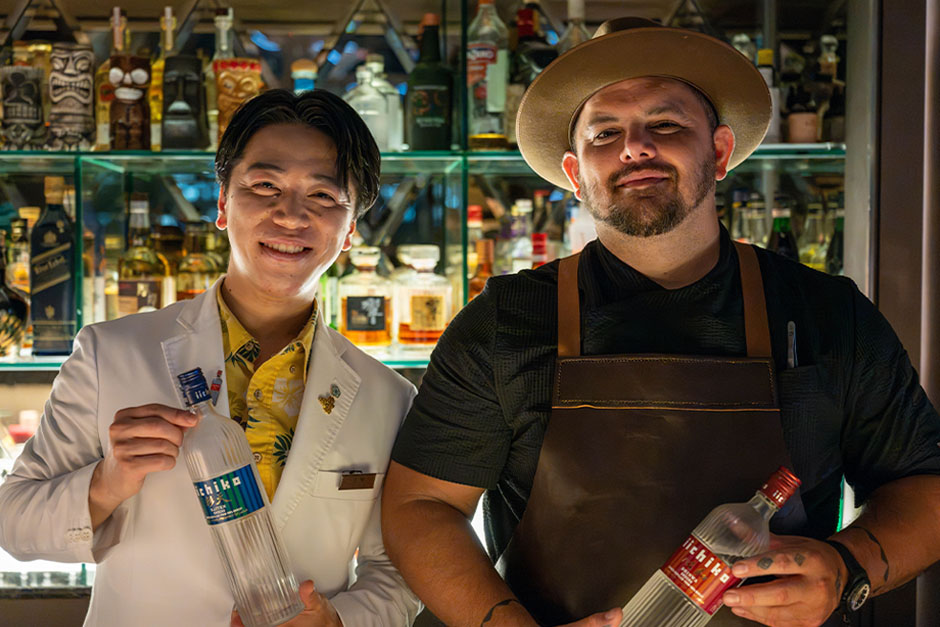
The Kahala Hotel & Resort Yokohama is where Yuya Takahashi, the inaugural Japan champion of the iichiko IRODORI Cocktail Competition, works. The hotel’s lounge hosted a cocktail event featuring honkaku shochu, including iichiko Saiten, and sake, with guest bartender Justin Park, co-founder and head bartender of Bar Leather Apron.
Text: Ayako Kuraishi / Photography: Koichi Mitsui / Composition: Contentsbrain
An Event Bringing Out a New Side of Honkaku Shochu Through Cocktails with a Hawaiian Flair
First held in Japan in 2025, the iichiko IRODORI Cocktail Competition explores new possibilities for cocktails using iichiko Saiten honkaku barley shochu as their base. Its inaugural champion was Yuya Takahashi of The Kahala Hotel & Resort Yokohama.
Takahashi practices his craft at THE KAHALA Lounge on the hotel’s 14th floor. Offering panoramic views of the nighttime skyline of Yokohama’s Minato Mirai district, this bar lounge hosts “The Session,” an occasional series of collaborative events featuring renowned guest bartenders from Japan and overseas. Each event creates a cocktail experience that can only be enjoyed at that particular time and place. Since the series began in 2023, a diverse lineup of guest bartenders has served creative cocktails inspired by a different theme each time.
“The Session #29 -Hawaiian Night-,” held on August 28, featured Justin Park, co-founder and head bartender of the acclaimed Bar Leather Apron in Honolulu, Hawaii. Working alongside Takahashi behind the bar, Justin served cocktails made with Sanwa Shurui’s honkaku shochu—including iichiko Saiten and iichiko Shinwa—as well as the company’s sake and wine, giving them a Hawaiian twist through the ingredients and flavors used.
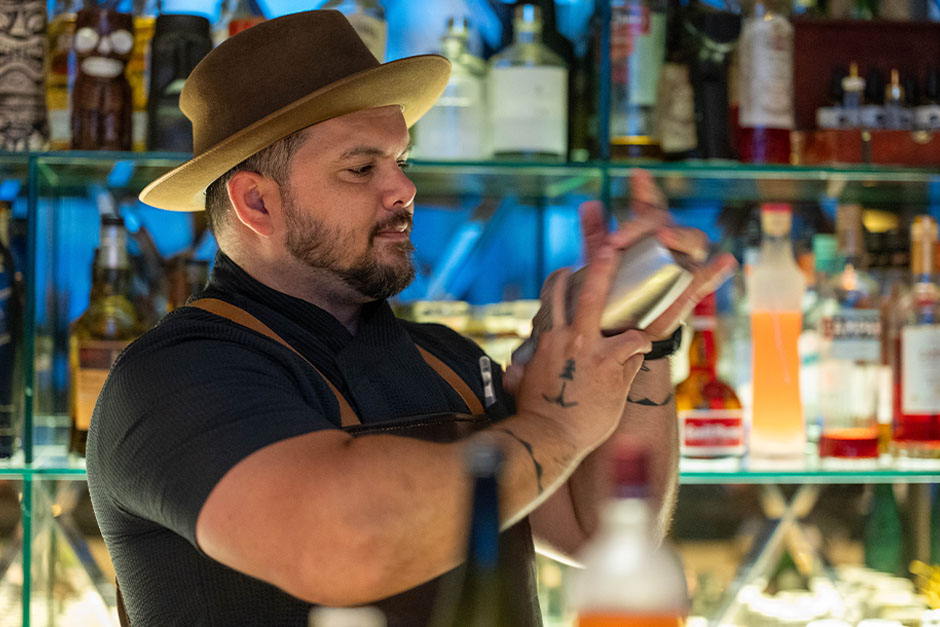
Reflecting on this edition of “The Session,” Shinya Tozuka, head bartender of THE KAHALA Lounge and the event’s supervisor, says, “This was a meaningful collaboration that explored Hawaiian culture—the roots of The Kahala Hotel & Resort—through cocktails.”
“When we settled on the theme of Hawaiian Night, I felt Justin was the only choice as our guest bartender. Two years ago, Takahashi and I visited Bar Leather Apron in Honolulu and tried Justin’s cocktails. We were deeply impressed by his skill and sensitivity in drawing out the nuances of each ingredient’s aroma and flavor and bringing them together with such finesse.
“I was confident that Justin would create cocktails that brought out a new side of honkaku shochu, including iichiko Saiten, while also conveying a sense of Hawaii. I believed his attentive hospitality, inspired by Japanese bar culture, and meticulous bartending would give our guests a wonderful evening,” says Tozuka.
Another highlight was the collaboration between Takahashi and Justin. Takahashi added flair to the event with Oedo Fashioned, the cocktail that won him the Japan Final of the iichiko IRODORI Cocktail Competition. Bringing together Japan and Hawaii, the evening paired a rising Japanese bartender with a leading creator highly regarded on the global bar scene. Their creativity resonated with one another, making it a truly special night.
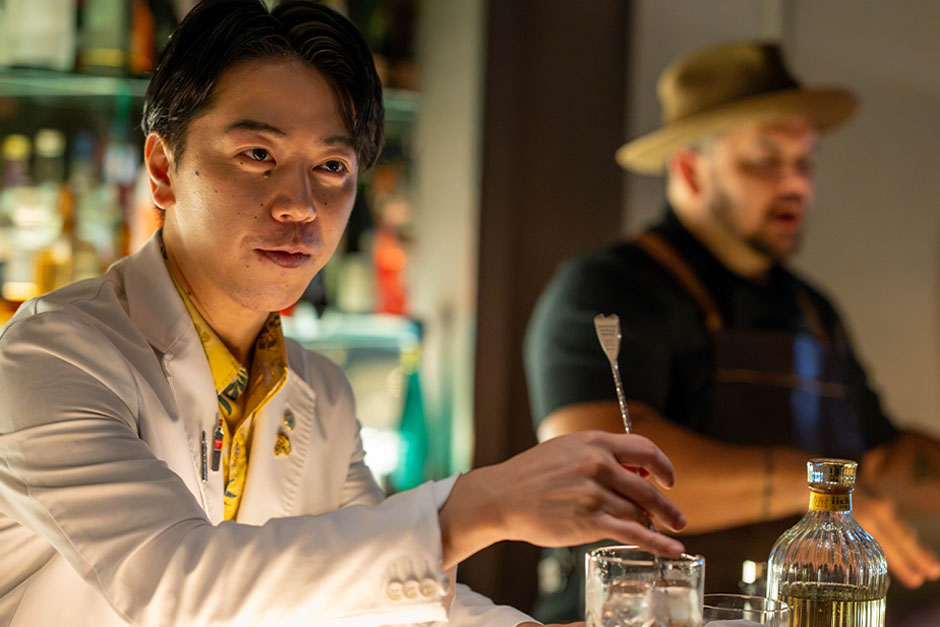
Cocktails Blending Japanese Spirits with Hawaiian Elements
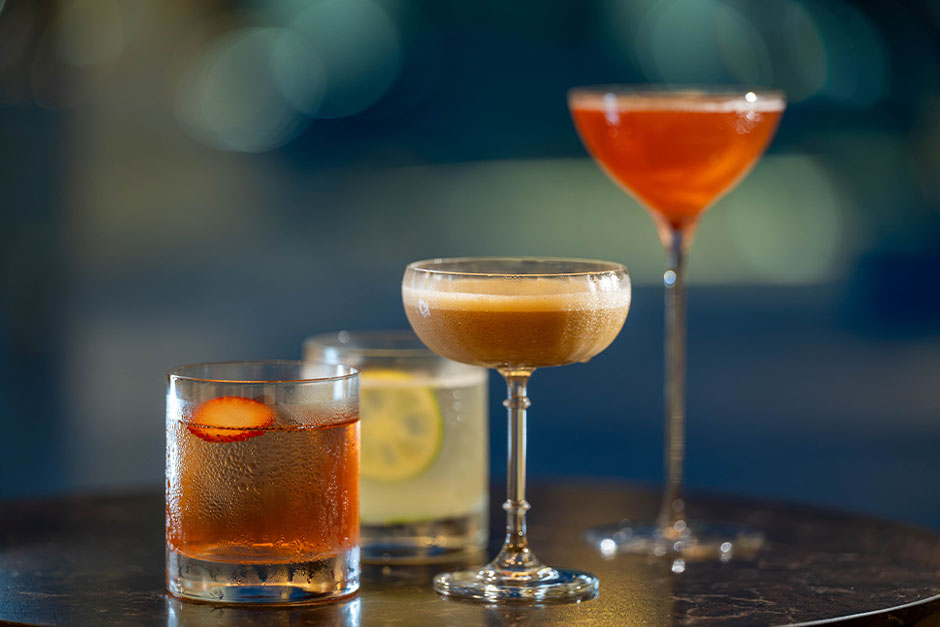
The menu for “The Session #29 -Hawaiian Night-” featured four cocktails served by Justin. Each had a name drawn from the Hawaiian language, including Kope ʻIka and ‘Ula ʻUla. Made with iichiko Saiten, Kope ʻIka is a coffee cocktail featuring an abundance of Hawaiian ingredients. Prepared in the flip style by shaking the base spirit, iichiko Saiten, with egg and sugar, it has a rich, full-bodied flavor and a silky texture.
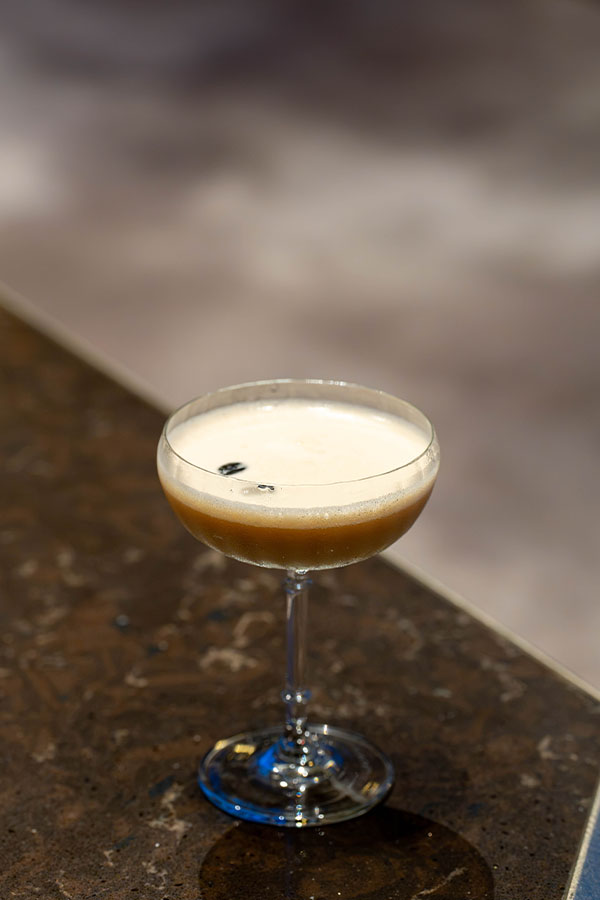
“iichiko Saiten has a pronounced aroma and packs an alcoholic punch. Its robust character and expressive koji flavors give it a presence that holds its own against the aroma of coffee. I added Kohana Kokoleka, a honey and cacao liqueur made with rum from Oahu, to give the cocktail chocolate flavor and richness,” says Justin.
The finished cocktail has an irresistible flavor that balances the sweetness of chocolate, the bitterness of coffee, and a touch of salt. Beneath iichiko Saiten’s powerful character, toasted sesame notes and tropical nuances reminiscent of coconut also emerge.
“I wanted a toasted note, so I added vodka fat-washed*1 with sesame oil to infuse it with sesame aroma. The tropical nuances come from a pandan leaf syrup with added salt. Alongside the sweet aromas, richness, and salty accent, I also added the herbal liqueur Cynar. Its bitterness brings the cocktail’s overall flavor into balance,” says Justin.
*1 Fat-washing: A technique for infusing alcohol with the aromas and flavors of fats from ingredients such as meat, butter, nuts, and sesame. The fat and alcohol are mixed and placed in a freezer to solidify the fat (the alcohol does not freeze at 0°C). The mixture is then filtered to retain only the infused alcohol.
‘Ula ʻUla uses iichiko Shinwa as its base spirit.
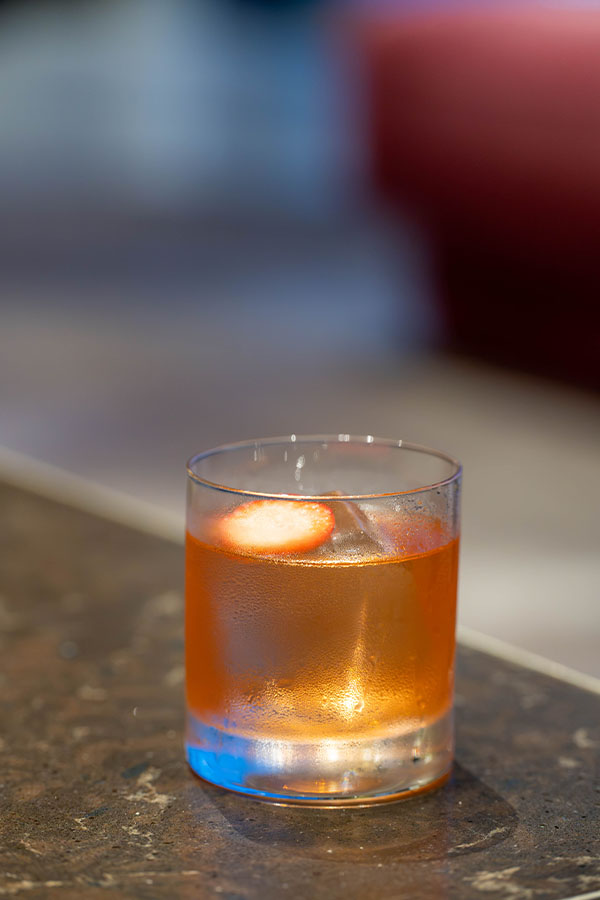
“ʻUla ʻUla means ‘red’ in Hawaiian. True to its name, the cocktail’s red color is a defining feature. I combined iichiko Shinwa—a honkaku shochu with striking fruity aromas reminiscent of pineapple and green apple—with the refreshing sweet-tart flavor of clarified*2 strawberries, the green notes of tomato water, and a hint of salt.
“A single-barrel reposado tequila*3 brings out iichiko Shinwa’s rich barley flavor. The tequila’s smoky finish complements the barley’s character, creating deep layers of umami that spread across the palate,” says Justin.
*2 Clarification: A technique for making a liquid clear by removing cloudiness and impurities while retaining the ingredients’ flavors.
*3 Reposado tequila: Tequila aged for two months to one year.
Two other cocktails featured Sanwa Shurui’s honkaku shochu, sake, and wine. Makani used the light, dry sake Wakabotan Hacyo Hinohikari as its base, layering aromas of fruit, flowers, and spice—including pomegranate, cinnamon, rose, peach, pear, and kiwi—and topping it with Ajimu Sparkling Wine. Huli offered a twist on the gimlet using iichiko Special, a honkaku barley shochu with a sweet aroma and a mellow, deep flavor.
Some guests at the lounge were visibly surprised as they tasted Justin’s Hawaiian-inspired cocktails, asking, “This is shochu-based?”
Crafting Cocktails from Japanese Spirits and Ingredients with a Distinctive Sensibility
Takahashi, who worked alongside Justin behind the bar, says of his cocktails, “He gave savory cocktails based on honkaku shochu a twist with ingredients from Japan and Hawaii. Just hearing the recipes, I was excited by the innovative combinations of ingredients.”
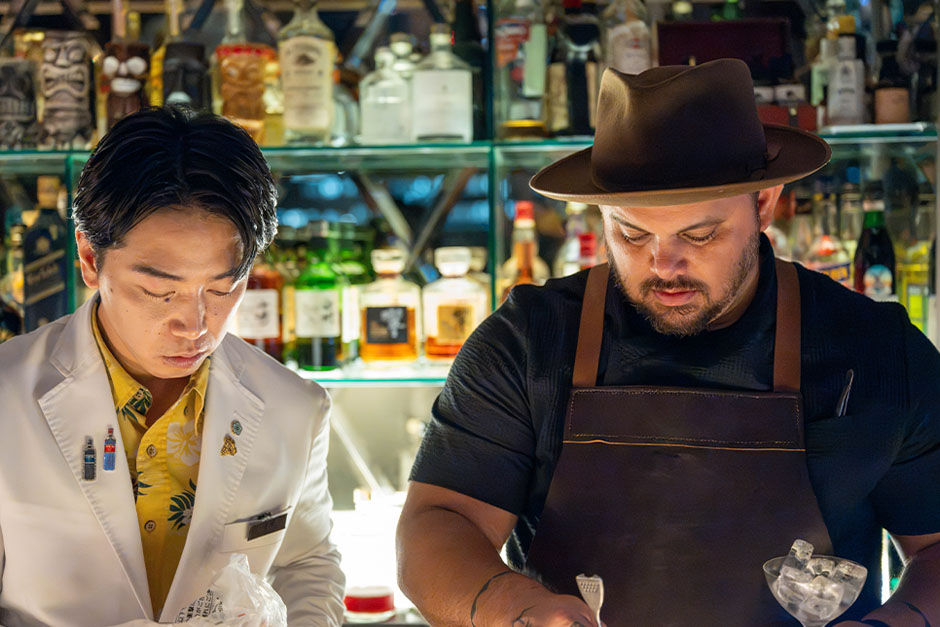
“He incorporates ingredients familiar to Japanese people, such as sesame and yuzu kosho, into his recipes with a sensibility different from our own. It gave me insight into how people overseas see Japanese culture.”
“We prepared ingredients that required advance preparation, such as the vodka fat-washed with sesame oil. The detailed recipes he shared with us were also very instructive. I was looking forward to seeing what flavors Justin would build with these ingredients,” says Takahashi.
Tozuka, meanwhile, says, “I felt the recipes were precisely attuned to Japanese tastes.”
“He accurately interprets the characteristics of the honkaku shochu and sake used as bases and builds cocktails around them. I was amazed by how he brought out even subtle nuances that we Japanese might overlook. In the Makani, for example, he expertly identified Wakabotan’s underlying pomegranate-like freshness, its pungent aroma reminiscent of cinnamon, and its vibrant rose notes, expressing them through the supporting ingredients.
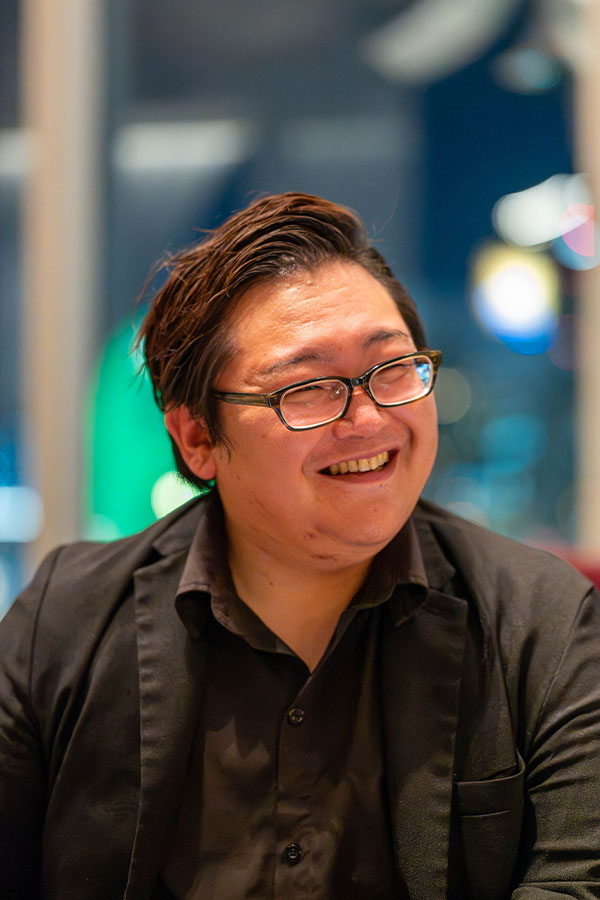
“None of the cocktails are low in alcohol, but you don’t notice its strength because all the ingredients harmonize beautifully into a single flavor. He brought out the harmony between the base spirit and the other ingredients superbly in each cocktail,” says Tozuka.
Expanding the Possibilities of Japanese Spirits in Cocktails in Hawaii
We asked Justin about the potential of honkaku shochu as a cocktail base.
“Honkaku shochu is stocked by many restaurants and bars in Hawaii. It’s familiar to local people, but they mostly drink it mixed with soda, and relatively few think of it as a cocktail base. That said, the full-bodied iichiko Saiten and iichiko Shinwa, with its striking barley aroma, are entirely different from typical honkaku shochu. You might even call them a new category of spirits. Exploring how to make the most of their koji nuances and flavors makes them very interesting cocktail bases.
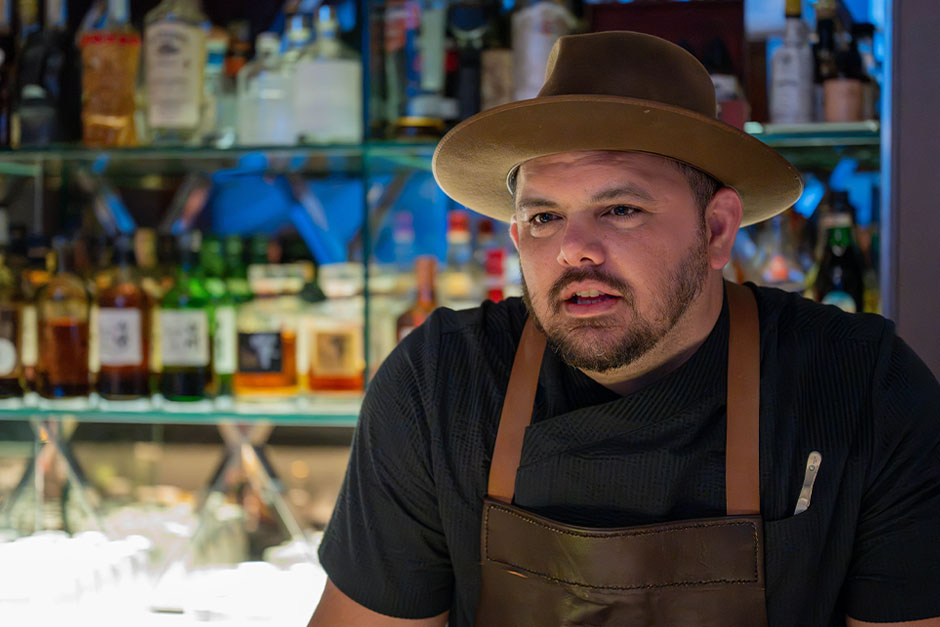
“Honkaku shochu has yet to establish a strong presence as a cocktail base on Hawaii’s bar scene. That means there is tremendous room for growth. At Bar Leather Apron, we offer honkaku shochu-based cocktails and explain to our guests that honkaku shochu is the base. As we continue serving it in bars this way, I think awareness will gradually grow,” says Justin.
The touch of Hawaii Justin brought to the event seems to have opened up new possibilities for iichiko Saiten.
Connecting Bartenders Worldwide Through the Competition
What did Justin Park, who promotes honkaku shochu-based cocktails in Hawaii, think of Takahashi’s signature cocktail, Oedo Fashioned?
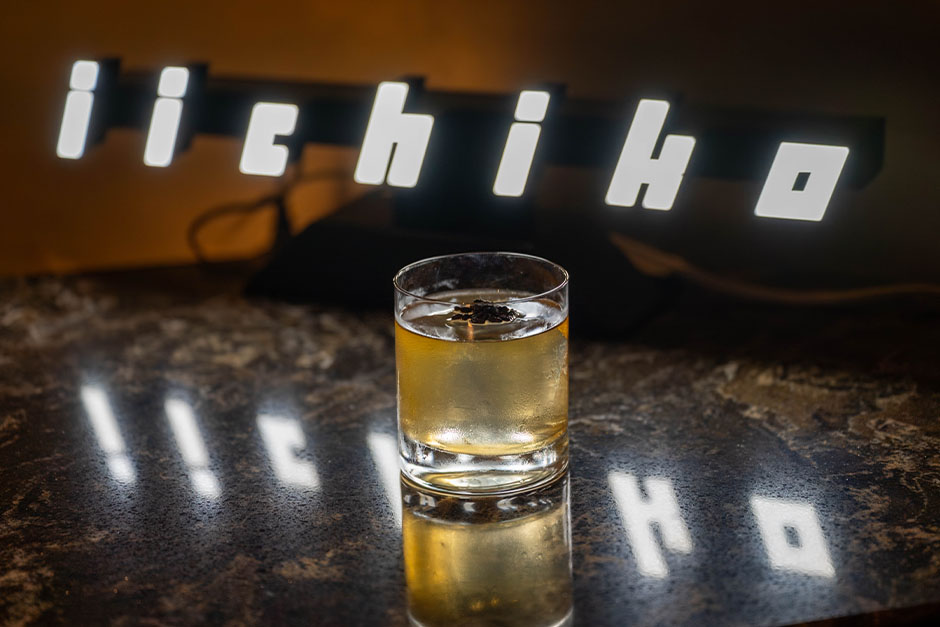
Oedo Fashioned adds a creative touch to traditional Japanese seasonings, including homemade mirin infused with the aroma of roasted brown rice and a charred soy sauce liquid, to create deep layers of umami and bring out iichiko Saiten’s distinctive richness and toasted notes. Inspired by Yanagikage,*4 sometimes described as Japan’s oldest cocktail, it earned recognition at the Japan edition of the iichiko IRODORI Cocktail Competition for its flavor, its concept, and a name that is easy to remember in both Japanese and English.
*4 Yanagikage: A drink made by adding shochu to mirin, said to have been chilled in wells and enjoyed to beat the summer heat during the Edo period. “Yanagikage” is its name in the Kansai region; in Kanto, it is also known as “Naoshi” or “Honnaoshi.”
“It’s fascinating that it was inspired by a drink sometimes called Japan’s oldest cocktail. I love the toasted aroma of the roasted brown rice!” says Justin.
Justin appreciated both the cocktail’s balanced incorporation of Japanese tradition and the story behind it. He also clearly enjoyed its flavor, joking, “I think it’ll be on our menu by next week!”
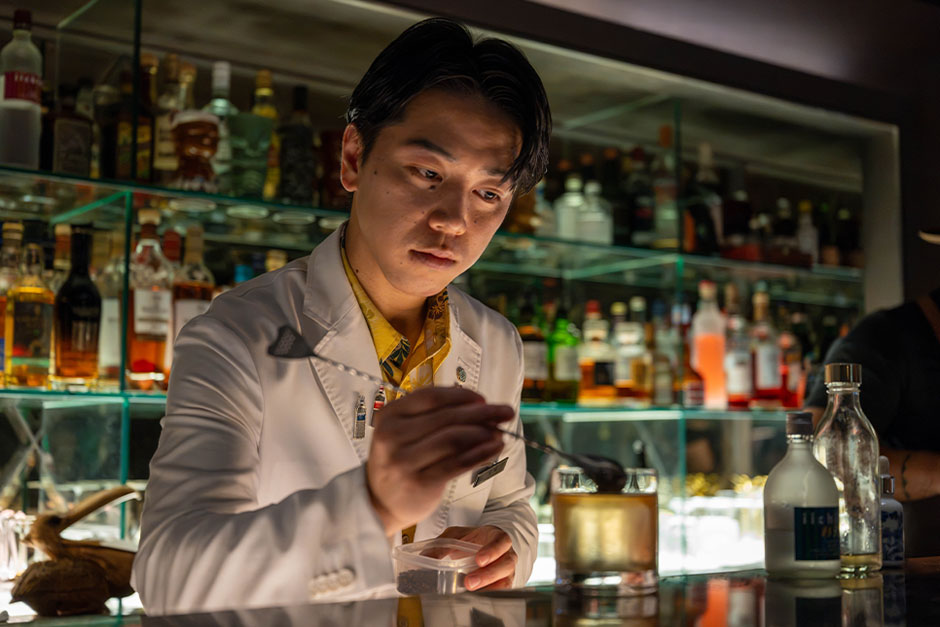
Finally, we asked Takahashi to reflect on this one-night collaboration between top bartenders from Japan and Hawaii.
“When I visited Bar Leather Apron two years ago, I was impressed not only by the flavors of Justin’s cocktails but also by the care and dedication he puts into every drink. It was a tremendous source of inspiration for me as a bartender. It was thanks to the iichiko IRODORI Cocktail Competition that I had this valuable opportunity to work alongside him behind the bar and watch his cocktail-making up close. I’m grateful for the chance to collaborate with a bartender at the forefront of the international bar scene,” says Takahashi.
At last year’s competition, Takahashi sought to show how a contemporary bartender could work with ingredients passed down since the Edo period and transform them into a cocktail. With demand for honkaku shochu-based cocktails now higher than ever, as Justin also notes, Takahashi shared his ambition to bring iichiko Saiten to cities around the world through the Oedo Fashioned.
“I want to build on the opportunity the iichiko IRODORI Cocktail Competition has given me to grow further as a bartender and introduce people around the world to the wonderful Japanese spirit that is iichiko Saiten, as well as the appeal of the Japanese culture that nurtured it,” says Takahashi.
Now in its second year, the Japan edition of the iichiko IRODORI Cocktail Competition will hold its final on November 6. This year’s theme is “KOJI × CULTURES.” The competition will judge the creativity of cocktails that place iichiko Saiten center stage, combining koji—a cornerstone of Japanese food culture—with the cultures and sensibilities of different regions.
The winner of the Japan Final will advance to the inaugural Global Final, scheduled for spring 2027. Who will follow Takahashi onto the world stage? Stay tuned as the competition unfolds.
Find out more about the iichiko IRODORI Cocktail Competition 2026here.
