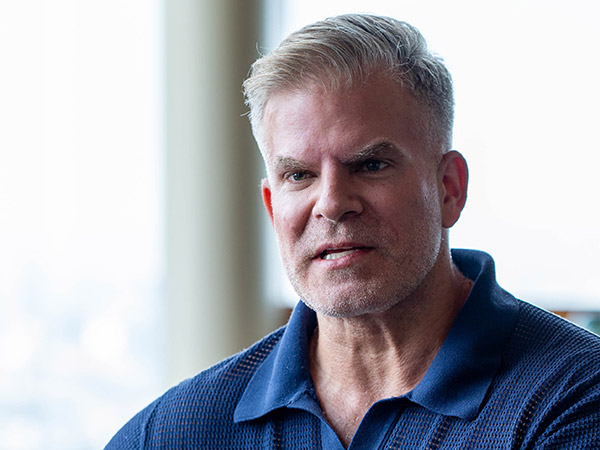
- Leo Robitschek
- Bar Director
Born in Venezuela and raised in Miami, Leo Robitschek gained hands-on experience in the food and hospitality industry through part-time work while attending the University of Miami. In 2005, he began working at the New York restaurant Eleven Madison Park (EMP), and in 2009 he was promoted to head bartender, where he oversaw the restructuring of the cocktail program. In 2012, he was appointed bar director of The NoMad Hotel, which opened in New York that same year. In 2015, he was named New York City Bartender of the Year by Eater, and he has earned high acclaim both in the United States and abroad for menu creation that blends classic and innovative elements. He currently serves as Vice President of Food & Beverage at Sydell Group, where he oversees the bar programs for The NoMad hotel group. His publications include The NoMad Cocktail Book.
Awards received by the establishments: EMP has received numerous honors, including World’s Best Restaurant Bar at the 2011 Tales of the Cocktail The Spirited Awards®. The bar at The NoMad Hotel received the James Beard Foundation’s Outstanding Bar Program award in 2014 and 2016, was ranked No. 3 in the world and No. 1 in North America in The World’s 50 Best Bars in 2017, and was named Best Bar in North America at the Tales of the Cocktail The Spirited Awards®. In 2018, it was ranked No. 4 in the world and No. 1 in North America in The World’s 50 Best Bars.
with Bartender
Exploring the journeys and the thoughts that shape globally active bartenders behind the bar.
2026.11.10
Leo Robitschek
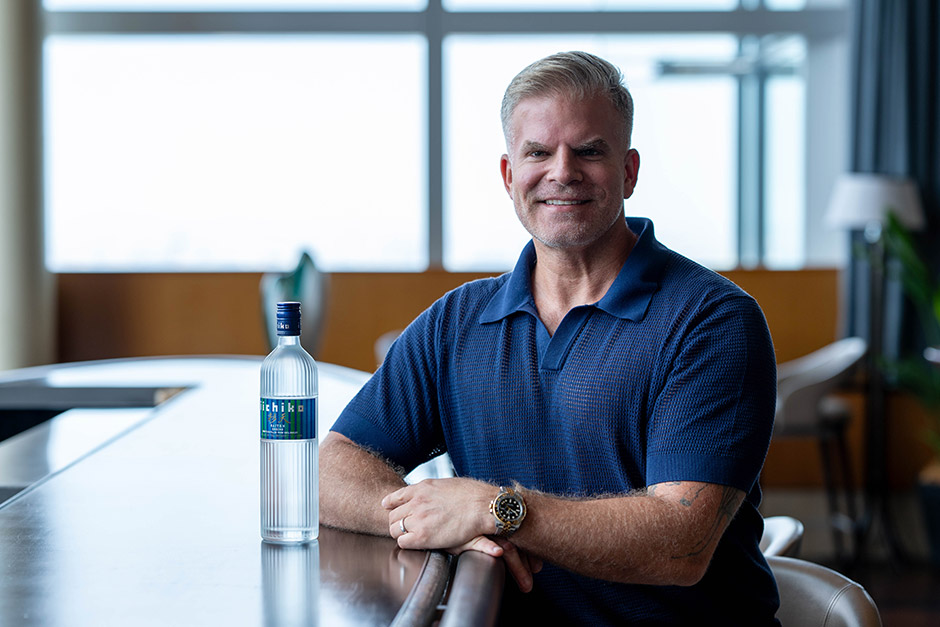
Necessity Drove Experimentation That Led to Delicious Cocktails
Leo Robitschek has played a key role in building Eleven Madison Park into one of New York’s most sought-after restaurants and in launching the luxury hotel The NoMad Hotel, where he has demonstrated exceptional skill as the overall head of the bar division. He is also highly regarded as an active bartender in his own right, having been named New York City Bartender of the Year by Eater in 2015. We asked him about his first encounter with honkaku shochu, as well as the kinds of challenges that emerge in an era of declining alcohol consumption.
Text: Akira Suzuki / Photography: Koichi Mitsui / Composition: Contentsbrain / English Translation: LIBER
Interview Location: The Bar, The Ritz-Carlton, Tokyo (Tokyo Midtown 45F, 9-7-1 Akasaka, Minato-ku, Tokyo)
Entering the Hospitality Industry with Dreams of Becoming a Doctor
――Could you tell us how you came to work in bars?
I was born in Venezuela and raised in Miami. While attending the University of Miami, I worked in hospitality to help support myself, mostly in nightlife. To be honest, I wasn't a very good bartender at the time, and I didn't take it particularly seriously. It was more of a job than a career.
After graduating from university, I moved to New York to pursue a career in finance. But once I started working, I began to think about taking a different path and becoming a doctor. I knew it would be unrealistic to keep working at a finance company while studying to get into medical school, so I looked for a job where I could work a little at night and earn money.
In 2003, I joined SUSHISAMBA, a restaurant with a unique blend of Japanese, Brazilian and Peruvian culture and cuisine. It was the first place where I was exposed to a truly professional bar program and where I began to understand the craft, creativity, and hospitality behind bartending.
Finding Fulfillment in Building and Developing Food and Beverage Programs
In 2005, I joined Eleven Madison Park, where I was given the opportunity to create and develop the cocktail program. What started as a temporary job quickly became a passion. Together with chef Daniel Humm and general manager Will Guidara, the three of us, including me, set ourselves the goal of creating the best restaurant in New York. I think we made an ideal team. I spent the next 15 years helping transform Eleven Madison Park into one of the world's most celebrated restaurants while building a cocktail program that reflected the restaurant's evolution.
In 2012, I helped open The NoMad Hotel in New York, where I was involved in everything from concept development and brand creation to building the food and beverage program. That experience ultimately showed me that hospitality was not simply a job, but the career I wanted to dedicate my life to.
Around that time, EMP’s owner, Danny Meyer told us, “EMP has become something beyond anything I ever imagined.” He then suggested that we take over the operation of EMP ourselves. Danny also supported us through the transaction, and thanks to that, we were able to take it over and run it as our own brand.
At one point, a popular restaurant Danny had run fell into a sharp decline after a key figure at the center of it left, so I think he did not want the same thing to happen again at EMP. After all, people and teamwork are what matter most in a restaurant. Rather than having the three of us leave EMP for the new hotel project, I think he wanted us to stay involved in the hotel while also keeping EMP successful.
As Head of Food and Beverage at The NoMad Hotel
――Are all The NoMad Hotel locations currently in the United States and the United Kingdom?
Today, NoMad operates in London. We are excited to be opening NoMad Miami and NoMad Singapore, with NoMad Detroit also scheduled to open. Beyond those projects, we have a number of additional developments in the Americas, Asia, and Europe, but we are not yet able to discuss them publicly.
――As the person responsible for the overall bar program, what does your work involve?
There are two main parts to my job. One is shaping the hotel’s core concept. Together with the brand manager, we decide what kind of story the hotel should tell, and based on that, we determine everything from the music, design, and interiors to the kind of people we want to hire.
The other is developing food and drink recipes. The team shares ideas, and I make the final decisions. Every Wednesday, we hold a workshop where bartenders present cocktail recipes, and we refine them together. We also have the chefs prepare various dishes, which the whole team tastes as we consider how they can be improved. Because I am fortunate to work with such passionate and creative people, we are able to develop recipes that I would be unlikely to arrive at on my own.
As for the food, each NoMad location offers signature dishes that reflect the brand, while also presenting distinct concepts tailored to each location. In line with this, we also adapt the bar program. For example, at Side Hustle, the bar at NoMad London, we feature a Latin America–inspired concept, focusing on cocktails made with agave spirits such as tequila and mezcal. In Singapore, we plan to create a bar with a tropical atmosphere inspired by both Singapore's legendary Tropicana nightclub and the iconic Tropicana Club of Havana, drawing on their rich histories of music, entertainment, culture, and social life.
――When did you first try honkaku shochu, and what was your impression at the time?
I think it was around 2001. There were many restaurants in New York City serving excellent Japanese food, and I believe that was where I first tried it with colleagues from work. I had it first on the rocks, then with soda. But to be honest, I did not like it at first. I could not really warm to the sweetness from the koji or to its distinctive flavor and aroma, which reminded me of overripe fruit. I think that was probably a fairly common reaction among Western drinkers encountering shochu for the first time back then.
It was around 2003 that I properly learned about honkaku shochu. When I was working at a restaurant called SUSHISAMBA, I received a full introduction to Japanese alcoholic beverages. Then, in 2013, I had my first cocktail made with honkaku shochu. It was made for me by Shingo Gokan, who was working at Angel’s Share in New York, and that was the first time I thought honkaku shochu was delicious. By then, I was already working at EMP, and after work I would usually have dinner with colleagues and then go to Angel’s Share, where I drank a great deal of honkaku shochu and shochu-based cocktails. Through those experiences, I gradually became accustomed to honkaku shochu.
Experimenting in the Age of Low-Alcohol Drinking
――I understand that you are currently working on a low-alcohol gin called Second Sip?
Second Sip is really a passion project for me, or rather something I am doing because I enjoy it. It is an attempt to explore the emerging category of low-alcohol gin, with an alcohol content of 20% ABV. It is also something developed with younger people’s growing move away from alcohol in mind. Young people today really are drinking less. I feel that this trend is more pronounced in the United States than in any other country.
There are probably two reasons for that. One is economic, and the other is that, especially among younger people, there seems to be a growing awareness around drinking more thoughtfully. Enjoying alcohol in moderation, valuing balance, and seeking a better drinking experience have become increasingly important to many guests. Rather than drinking simply to get drunk, many people today drink because they want to enjoy something truly delicious.
Second Sip was also something I personally needed. I love every aspect of drinking alcohol: the flavors, the mixology side of it, and the culture and craft of distilled spirits. What I love most, though, is the social side of it, spending time with other people, having new experiences, and creating moments that become part of my memories.
But as I have gotten older, I have found that after drinking a lot at a party, for example, I do not feel well the next morning. At the same time, I still want to enjoy plenty of cocktails. Second Sip came out of the feeling that if the alcohol content were lower, I could enjoy more moments, more occasions, and more cocktails throughout an evening without sacrificing the experience.
――I completely agree with your way of thinking. I also want to enjoy as many different kinds of cocktails as possible.
Actually, I had been making low-alcohol cocktails for quite a long time. When I started working at EMP in 2005, it was still a casual, bistro-style restaurant, unlike what it is today. We then began shifting it toward a fine-dining restaurant. During that transition, we lost the regular customers we had up to that point. A place that had originally welcomed around 300 customers a night suddenly dropped to only about 15, and we found ourselves in a very difficult business situation.
To get through that period, I was told for a while that I was not allowed to buy any new bottles. I had to use up everything the bar already had in stock before purchasing anything new. The previous bar director had bought a lot of the spirits he personally liked, so there was a large inventory of lower-alcohol products such as sherry and vermouth. At the time, they were hardly ever used in cocktails there. But since I could not buy new spirits until I had used up what we already had, I ended up having no choice but to start making low-alcohol cocktails out of necessity.
――Those were the kind of original low-alcohol cocktails that would be seen as ahead of their time today.
Back then, especially in New York, bar cocktails were beginning to regain popularity. Classic cocktails were the mainstream, but at EMP we introduced our own twists. For example, with a highball, we would combine not only whisky but also whisky and sherry. As a result, we came up with cocktails that were unique and delicious. But it wasn’t because I had come up with some brilliant idea. As I’ve said, it was really out of necessity: unless we sold through what we had, we couldn’t buy any new spirits [laughs].
In New York, bartenders at the forefront of the cocktail revival were very popular, but if I had been working under people of that caliber, I probably would not have come up with those new ideas of my own at the time. I think I would have simply done things the way they were doing them. In that sense, not having a mentor allowed me to develop my own originality.
iichiko Saiten as a Gateway for People Not Yet Familiar with Honkaku Shochu
――What do you think about making cocktails with honkaku shochu?
I think iichiko is taking a forward-looking approach. By creating iichiko Saiten, a honkaku shochu with an alcohol content of 43% ABV, they have made it easier to use in cocktails as a substitute for other spirits. When you try making classic cocktails that would normally use gin or vodka with iichiko Saiten instead, it adds umami and extra depth of flavor, and the result is something unique.
If bartenders and customers alike come to understand the umami and that added layer of flavor that honkaku shochu brings to cocktails, then they will also be able to appreciate relatively lower-alcohol honkaku shochu such as iichiko Silhouette, which is 25% ABV. In that sense, I think iichiko Saiten serves as a gateway for people who are not yet familiar with honkaku shochu.
――By the way, do you still want to become a doctor now?
No [laughs]. Even so, my love of science has not changed, and I have always wanted to help people and be of use to someone. I may not be healing people physically, but hospitality allows us to care for people in a different way. We create connection, celebration, and memories, and that's something I've come to value tremendously.