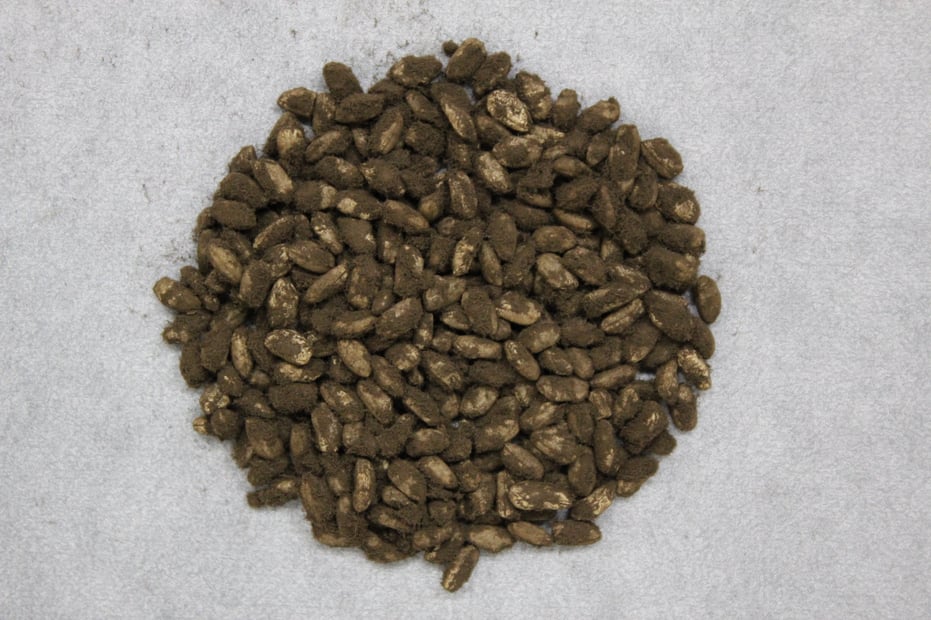
Known as “Dr. Shochu,” Masahiko Shimoda has long been involved in honkaku shochu production at Sanwa Shurui, both as an engineer and as an executive. In this series, he explores the appeal of honkaku shochu from multiple perspectives. Following on from the previous installment, Vol. 3 focuses on the production process of honkaku shochu. Guided by the fundamental principles of Japanese sake making—first koji, second moto (yeast starter), third brewing—this installment returns to “first koji,” examining the seikiku (koji making) process, in which koji mold is cultivated on processed raw ingredients such as rice and barley.
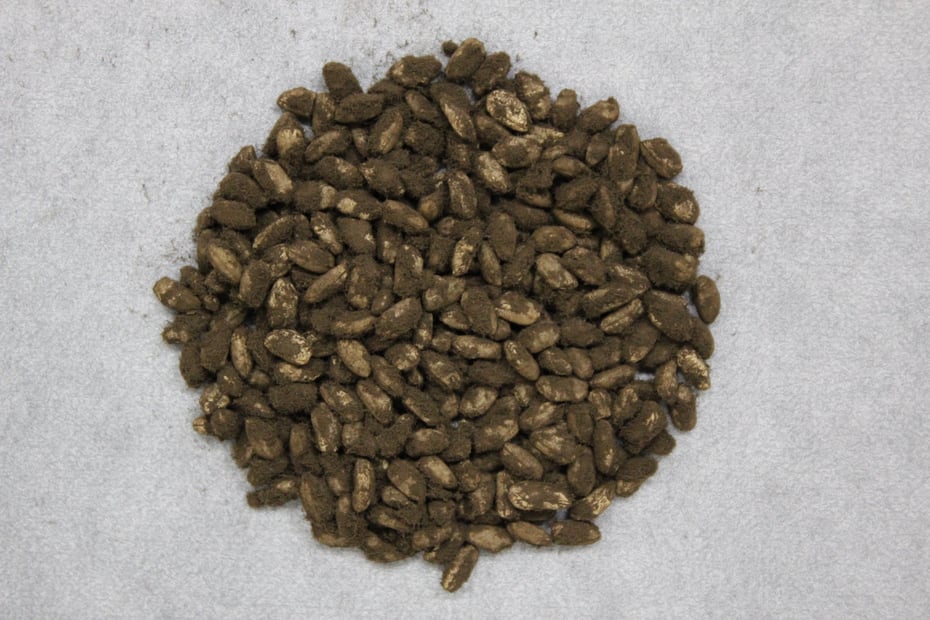
Rice koji cultivated with white koji mold

(Photo courtesy of the National Research Institute of Brewing)
⇒ Vol. 1: Honkaku Shochu: The “Miracle Spirit” and 3 Reasons Why
⇒ Vol. 2: “First Koji” Part 1—The First Step Toward Crafting Exceptional Honkaku Shochu
As told by: Masahiko Shimoda, Advisor, Sanwa Shurui Co., Ltd. / Composition: Kenji Inoue, Contentsbrain
● About the Saying “First Koji, Second Moto, Third Brewing”
The saying “First koji, second moto, third brewing” is a traditional Japanese proverb that expresses the relative importance of each step in the sake brewing process. It means that to create a good moromi⋆1 (the main fermentation mash), you must first have a good moto (also known as shubo, or yeast starter), and to make a good moto, you must begin with excellent koji (in sake, steamed rice inoculated with koji mold). In other words, the proverb emphasizes that koji making, the very first step, is the most important of all. Although honkaku shochu is a distilled spirit and differs in production method from sake, the first half of the honkaku shochu production process follows the same principle.
⋆1 Moromi: A mash consisting of koji—which is steamed rice or barley inoculated with koji mold—water, yeast, and other ingredients in a fermentation tank, in which saccharification and alcoholic fermentation have already progressed. When pressed (in sake brewing), it becomes unrefined sake (genshu), and when distilled, it becomes the base spirit for honkaku shochu.
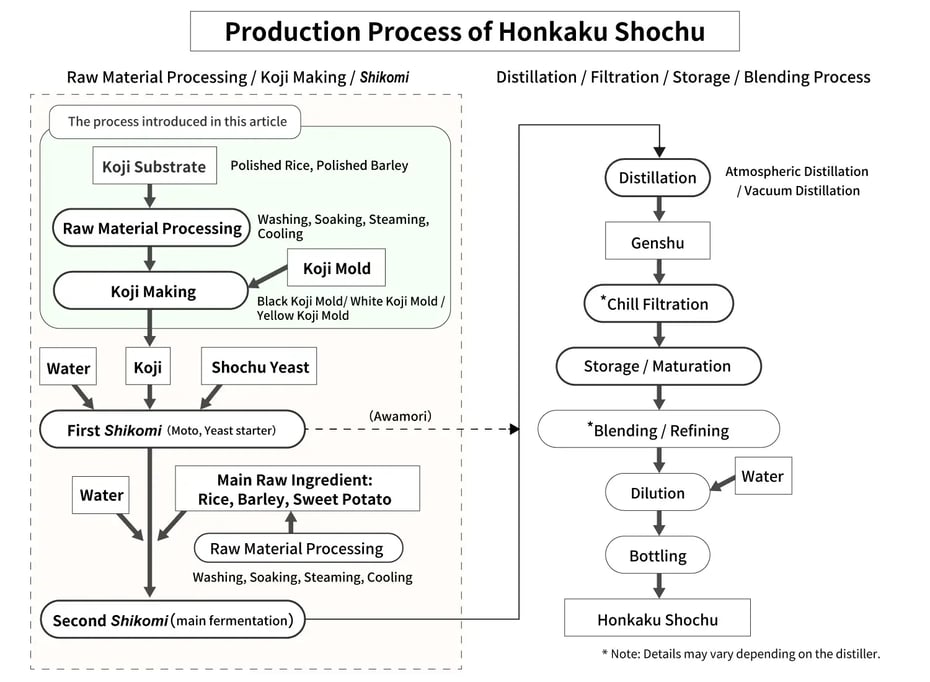
In the previous installment, we introduced the series of steps involved in properly polishing the raw ingredients used for honkaku shochu, such as rice and barley, and then preparing them through the sequence of washing, soaking, steaming, and cooling to create an environment conducive to the growth of koji mold.
Step 1: Koji substrate and polishing
Step 2: Raw material processing
In this installment, we turn our attention to the seikiku process, in which koji mold is cultivated on the steamed ingredients to produce koji. Koji making draws on techniques that have been refined over centuries in Japanese sake brewing. We also explain the innovations in honkaku shochu production brought about by the discovery of black koji mold.
Step 3: Seikiku (Koji Making)
Traditional Techniques Seen in Barakoji Making
Koji refers to polished raw materials such as rice or barley that have been cultivated with koji mold, while the process of making koji is known as seikiku. Here, we introduce a traditional method of koji making known as the futa-koji method, a hands-on approach to rice koji production that uses yellow koji mold, a type of koji mold that has been used in Japan since ancient times.
The rice koji used in both sake and honkaku shochu is made by cultivating koji mold on each individual steamed rice grain. This is known as barakoji. The futa-koji method was established by earlier generations through long years of experience specifically for barakoji making.
First, the steamed rice is brought into the koji room (koji muro), the dedicated workspace where koji is made. The koji room is a clean, well-ventilated space with carefully controlled temperature and humidity. The steamed rice is piled on the toko⋆2 to a height of about 30 cm, wrapped in cloth to retain heat, and left for a time to allow the temperature to equalize. The pile is then broken up, and the rice is spread thinly while being mixed by hand.
This is where the skills of the toji, the person with overall responsibility for fermentation, truly come into play. From above the steamed rice spread across the toko, tane-koji⋆3—the starter that serves as the "seed" for koji—is carefully and evenly sprinkled. This process is akin to sowing seeds to propagate the koji mold.
⋆2 Toko: A worktable used for koji making.
⋆3 Tane-koji: A commercially available starter produced by specialist suppliers by cultivating koji mold as purely as possible and inducing it to form large quantities of spores. Many of these suppliers are part of a traditional industry with histories spanning several centuries, and today only a handful remain in Japan.
The rice is then mixed thoroughly by hand so that the spores adhere to each individual grain. This process is known as toko-momi. Once toko-momi is complete, the rice is again piled up to a height of about 30 cm and kept warm. After a short time, the koji mold attached to the rice grains begins to multiply.
As the germinated koji mold becomes more active, the temperature rises. To prevent uneven temperature distribution, the piled steamed rice is broken up, mixed, and then piled again in a process known as kirikaeshi. By releasing excess moisture from the steamed rice, kirikaeshi helps suppress excessive temperature increases while evening out the entire mass, thereby preventing haze-ochi⋆4—a condition in which proper koji fails to develop.
⋆4 Haze-ochi: Haze refers to the white appearance of steamed rice when the fine filaments (hyphae) of koji mold proliferate. When the growth of these hyphae is insufficient and the rice remains hard and essentially unconverted, the condition is known as haze-ochi.
By the second day, the growth of the koji mold becomes more vigorous and the temperature rises further. At this stage, the koji is divided into smaller portions and transferred to shallow cedar boxes known as koji-buta⋆5. By rearranging the position of the boxes, mixing the koji, and controlling the temperature within each box, the fermentation environment is carefully managed. Maintaining an optimal temperature not only promotes the growth of the koji mold but also stimulates the active production of enzymes within the koji, enzymes that are essential for the subsequent stages of brewing.
⋆5 Koji-buta: A small wooden box, typically made of cedar, that holds approximately 1.5–2.5 kg of rice. Commonly referred to simply as futa (buta).
About 40 hours after the tane-koji is sprinkled, the growth of the koji mold reaches its peak. The koji is then held at 42–43°C for a period of time before finally being removed from the koji room—a step known as dekoji (taking the koji out). With this, the seikiku process is complete. During this critical stage, the kurabito (brewery artisans) responsible for koji making repeatedly alternate between work and short naps, constantly monitoring the koji as it develops. This is the overall process for making rice koji using yellow koji mold.
In contrast, black koji mold and white koji mold are generally used for barakoji making in honkaku shochu and awamori. The basic workflow is the same as for rice koji made with yellow koji mold, but with black and white koji mold, the temperature of the koji is lowered to 35°C during the latter half of the seikiku process up until dekoji in order to promote the production of citric acid (the production of citric acid by black and white koji mold is discussed later). In addition, in honkaku shochu production, koji may be made not only from rice but also from barley or sweet potatoes, and depending on the ingredient, the handling and temperature progression differ in subtle ways.
These traditional barakoji-making techniques used in sake and honkaku shochu production are exceptionally original and delicate by global standards of alcohol production.
.jpg?width=930&height=621&name=insights007_03%20(1).jpg)
With that in mind, let us take a closer look at yellow koji mold, which is used mainly in sake brewing, and black and white koji mold, which are used in honkaku shochu and awamori, as this is a particularly important point.
The Saviors of Honkaku Shochu: Black Koji Mold and White Koji Mold
Today, three types of koji mold are used in honkaku shochu production: yellow, black, and white. According to the FY2024 Brewing Lecture Materials issued by the Kumamoto Regional Taxation Bureau, across Southern Kyushu—the main production region for honkaku shochu—white koji mold accounts for 87% of usage, black koji mold for 7%, yellow koji mold for 2%, and mixed use for the remaining 4%.
The use of koji mold in honkaku shochu production has evolved through many twists and turns over the course of history. Let us take a look back at that history.
%20(1).webp?width=930&height=540&name=Group%205%20(1)%20(1).webp)
Koji making using yellow koji mold (Aspergillus oryzae) became established around the 13th century, centered on Kyoto and Nara, and later spread nationwide, including to Southern Kyushu. It came to be widely used in the production of sake, miso, soy sauce, and other fermented foods. By contrast, the origins of honkaku shochu date back to around the 16th century, when sake mash was distilled in Southern Kyushu.
Yellow koji mold serves three main functions. First, it produces large quantities of enzymes that play a critical role in fermentation, such as those responsible for converting starch into sugars and breaking down proteins. Second, it supplies nutrients such as amino acids and vitamins that are essential for yeast growth and the promotion of fermentation. Third, it imparts characteristic aromas and flavors to alcoholic beverages.
.jpg?width=930&height=620&name=insights007_04%20(1).jpg)
(Photo courtesy of the National Research Institute of Brewing)
However, yellow koji mold does not produce acids that protect the mash from unwanted microorganisms, and as a result, spoilage occurred frequently in the warm climate of Southern Kyushu. This was particularly problematic in the production of imo shochu, which uses sweet potatoes as its main ingredient, making the production of high-quality imo shochu extremely difficult.
By contrast, the defining characteristic of black koji mold is its ability to produce citric acid. The large amounts of citric acid lower the mash to an acidic state (pH⋆6 3.2–4.2), thereby preventing contamination by unwanted microorganisms. While black koji mold fulfills the same first, second, and third roles as yellow koji mold, it also performs a fourth role—acidifying the mash—which effectively resolved the long-standing problem of spoilage, making it a "super" koji mold. Nevertheless, for a long time black koji mold remained confined to the Ryukyu Islands (present-day Okinawa), where it was preserved exclusively for awamori production.
⋆6 pH: An indicator of acidity and alkalinity. A value of 7 is neutral; values below 7 indicate acidity, while values above 7 indicate alkalinity.
After the Ryukyu Islands became Okinawa Prefecture in 1879, black koji mold (Aspergillus luchuensis) was discovered in 1901, and its usefulness came to be recognized nationwide. From that point on, black koji mold was introduced into honkaku shochu production, replacing yellow koji mold.
Initially, however, honkaku shochu producers in Southern Kyushu, who were accustomed to working with yellow koji mold, struggled to handle black koji mold. Its spores were literally jet black, like soot, and during the koji-making process they would stain clothing black, eventually even blackening the inside of the nose.
This problem was resolved some ten years after the introduction of black koji mold. In 1924, Genichiro Kawachi, who had been independently isolating and researching black koji mold, discovered white koji mold, a mutant derived from black koji mold. Its scientific name, Aspergillus luchuensis mut. Kawachii, was given in honor of Professor Kawachi.
The spores of white koji mold are less visibly staining than those of black koji mold, making it easier to work with, and like black koji mold, it also produces citric acid that prevents spoilage. As a result, white koji mold was rapidly adopted by many distilleries.
(Photo courtesy of the National Research Institute of Brewing)
.jpg?width=930&height=620&name=insights007_05%20(1).jpg)
(Photo courtesy of the National Research Institute of Brewing)
Differences can also be seen in the resulting flavor profiles of honkaku shochu made with black koji mold and white koji mold. Honkaku shochu produced with black koji mold tends to be dry, with a bold, wild character and depth of flavor, while honkaku shochu made with white koji mold is characterized by a milder aroma and a softer, gently sweet taste. For many years thereafter, a period of 100% white koji mold use continued; however, from around 1990, as product diversification progressed, an increasing number of distilleries began producing honkaku shochu that takes advantage of the dry, wild character imparted by black koji mold.
It would be no exaggeration to say that the emergence of black and white koji mold marked the arrival of true saviors of honkaku shochu. In this way, Japan's traditional knowledge and skills of sake-making with koji mold were registered as a UNESCO Intangible Cultural Heritage in December 2024 and continue to be carefully preserved and passed down.
Following koji making, the next step in honkaku shochu production is primary fermentation (first shikomi), in which koji, water, and yeast are combined in a fermentation tank to carry out saccharification and fermentation. This corresponds to "second moto" in sake brewing—that is, the preparation of the yeast starter by adding raw materials, water, and yeast. This process will be explained in detail in the next installment.
⇒ Vol. 2: "First Koji" Part 1—The First Step Toward Crafting Exceptional Honkaku Shochu
⇒ Vol. 1: Honkaku Shochu: The "Miracle Spirit" and 3 Reasons Why
Main references: Nihonshu (Sake) by Hiroichi Akiyama (Iwanami Shoten, 1994); Washoku to Umami no Mystery (The Mystery of Washoku and Umami) by Katsuhiko Kitamoto (Kawade Shobo Shinsha, 2016); Gendai Shochu-ko (Modern Shochu Studies) by Mami Inagaki (Iwanami Shoten, 1985); Shochu no Rirekisho (The Resume of Shochu) by Yoshihiro Sameshima (Ikaros Publications, 2020)
Masahiko Shimoda
Advisor, Sanwa Shurui Co., Ltd. / Doctor of Engineering
Born in 1955 in Bungo-Ono City, Oita Prefecture. After graduating from the Department of Fermentation Technology, School of Engineering, Osaka University, he worked for a sake brewery in Hyogo Prefecture. In 1984, he returned to Oita and joined Sanwa Shurui. While engaged as a technical specialist in shochu production technology development, product development, and quality control, he earned his Doctor of Engineering degree from Osaka University in 1998. Appointed to the Board of Directors in 1999, he became the company’s first president from outside the founding family in 2017, and was appointed Chairman in 2023. He has served as Advisor since October 2025.
